LDSFC Funded and Supported Research Projects
The Loeys-Dietz Syndrome Foundation Canada supports and funds innovative research initiatives related to Loeys-Dietz syndrome (LDS) and similar conditions.
The Foundation supports researchers through a research database, a new Canadian registry, and research funding in Canada and internationally.
CAN-ACT Registry
The CANadian Aortopathy and Connective Tissue Disorders (CAN-ACT) Registry is the first pediatric registry of its kind in Canada, dedicated to individuals affected by Heritable Thoracic Aortic Diseases (HTAD), including Loeys-Dietz Syndrome (LDS), Marfan Syndrome (MFS), vascular Ehlers-Danlos (vEDS) and other rarer connective tissue conditions.
The CAN-ACT Registry is a secure, centralized, and ethically governed national database that captures both genotypic and phenotypic information from children and youth diagnosed with Heritable Thoracic Aortic Disease (HTAD) across Canada. This includes data on symptoms, genetic mutations, diagnostic imaging, treatment strategies, lifestyle and exercise, quality of life, and long-term outcomes. By systematically collecting and harmonizing data across institutions, the registry serves as a robust evidence platform that:
- Informs and improves clinical decision-making
- Guides the development of care standards
- Catalyzes research on rare aortic conditions
Research Studies on Loeys-Dietz Syndrome
Through the Foundation’s LEAP Impact Award, researchers are currently investigating important gaps in Loeys-Dietz syndrome knowledge, including:
- Aortic and vascular responses to exercise in children
- Molecular biology of bone malformation
- Psychological and socioeconomic impacts of HTAD
- Cardiac magnetic resonance imaging biomarkers of heart health
Types of Research
There are three main types of medical research: basic, translational, and clinical.
Basic research focuses on how or why something functions. It often occurs in a laboratory and explores the molecules and structures of cells. For example, a researcher studying LDS might try to find out where and how an LDS-causing mutation occurs in the TGFB2 gene.
Translational research bridges the gap between basic research (in a laboratory) and clinical research (in humans). For example, if a basic researcher identifies an LDS-causing mutation, a translational researcher could explore how different drugs or methods are able to counter the effect of the mutation. If their research is successful in cells, tissue samples, or animals, then the research might advance to a clinical trial.
Additionally, translational research connects clinical studies to real life. For example, a translational researcher could study how real-world medical professionals can use information or interventions from a clinical trial.
Clinical research and clinical trials involve people and can be observational or interventional.
Interventional studies introduce a change or intervention to research participants and evaluate the intervention’s impact, safety, and effectiveness. Interventions include medical treatments, behavioral modifications, services, and more.
Observational studies do not provide an intervention. Instead, they observe and gather information through surveys and medical examinations or tests.
Comprehensive Access to Rare-disease Expertise in Oral Health
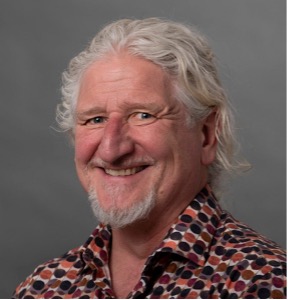
LDSF Canada is supporting the development of the CARE Network (Comprehensive Access to Rare-disease Expertise in Oral Health), a national initiative led by Dr. Daniel Graf, Professor in the Faculty of Dentistry at the University of British Columbia and Director of the Craniofacial, Oral, Dental Disorders (CODED) Research Cluster. The network brings together dental specialists, medical geneticists, researchers, educators, and patient partners to address critical gaps in oral health care for individuals living with rare diseases. Through a national workshop and ongoing collaboration, CARE will identify educational and clinical practice gaps, improve awareness of oral and craniofacial manifestations of rare diseases, and develop recommendations to support earlier diagnosis and more coordinated, patient-centred care. The initiative is particularly relevant to conditions such as Loeys-Dietz syndrome, where dental and craniofacial features may contribute to earlier recognition and timely access to specialized care.
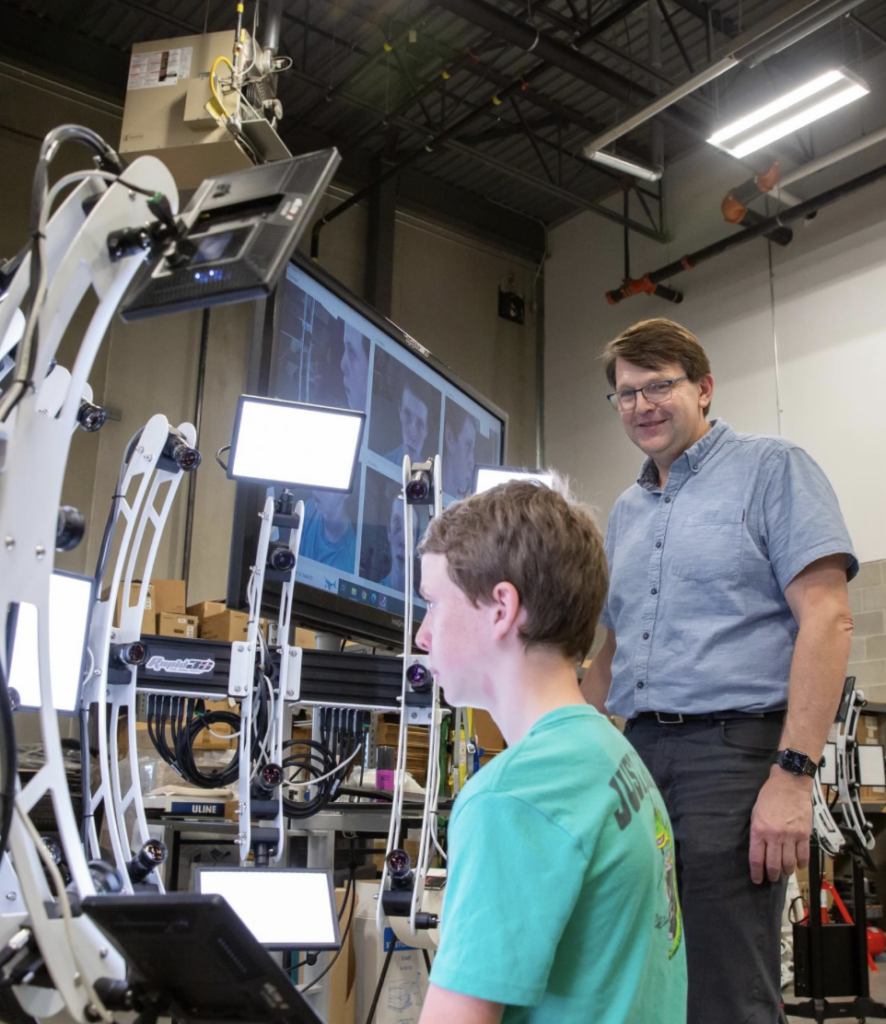
Using 3D Facial Imaging and Genetics to Predict HTAD Severity
LDSF Canada is supporting a research project led by Dr. Benedikt Hallgrímsson and his team at the University of Calgary that aims to investigate whether subtle craniofacial features can serve as biomarkers of aortopathy severity. By combining advanced facial phenotyping, genetic analyses, and animal models, the research team will examine how facial shape variation correlates with aortic disease progression and clinical outcomes in both syndromic and non-syndromic HTAD. The study will also identify genetic factors associated with more severe disease, with the goal of developing new tools for earlier diagnosis, improved risk stratification, and more personalized care. This innovative research highlights the potential of artificial intelligence and precision medicine to transform the care of individuals living with rare genetic disorders and heritable aortic disease.
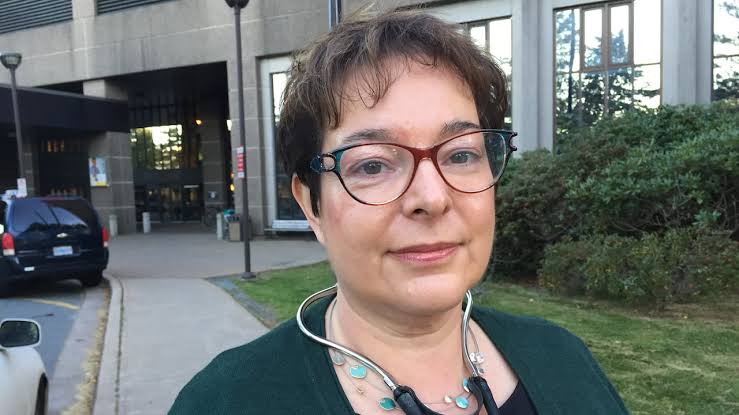
Patient-Initiated Family Screening for Genetic Aortopathy - Dr. Gabrielle Horne
LDSF Canada is supporting a research project led by Dr. Gabrielle Horne at the Maritime Connective Tissue Clinic to better understand how individuals with genetic aortopathies can encourage at-risk family members to undergo screening. Family screening is critical for identifying relatives who may be at risk of life-threatening aortic complications before symptoms occur. Building on more than 15 years of experience with a patient-initiated family screening model, Dr. Horne’s team found that while nearly one-third of screened relatives were identified as having a genetic aortopathy, fewer than half of patients successfully initiated screening within their families. Through interviews with patients who were highly successful, moderately successful, or unsuccessful in engaging relatives, this qualitative study will identify barriers, facilitators, and best practices for family outreach. The findings will help inform strategies to improve early detection, increase family screening uptake, and ultimately prevent avoidable aortic dissections and sudden deaths.
Study coming soon!

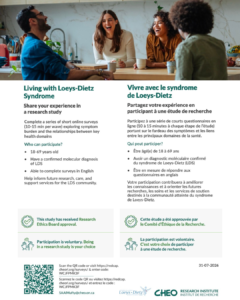
Loeys-Dietz Syndrome Multidomain Health Study – Dr. Julie Richer
As a patient-driven organization, LDSF Canada has played a key role in supporting the development of this study through funding and ongoing collaboration with the CHEO Research Institute. The Foundation has helped ensure that the research addresses the priorities and concerns most important to the LDS community, while supporting knowledge translation and dissemination of the findings back to patients and families.
To join the study, please visit: redcap.cheori.org/surveys and enter code: WCJFPMK3F
Patient Voices Driving Research and Change
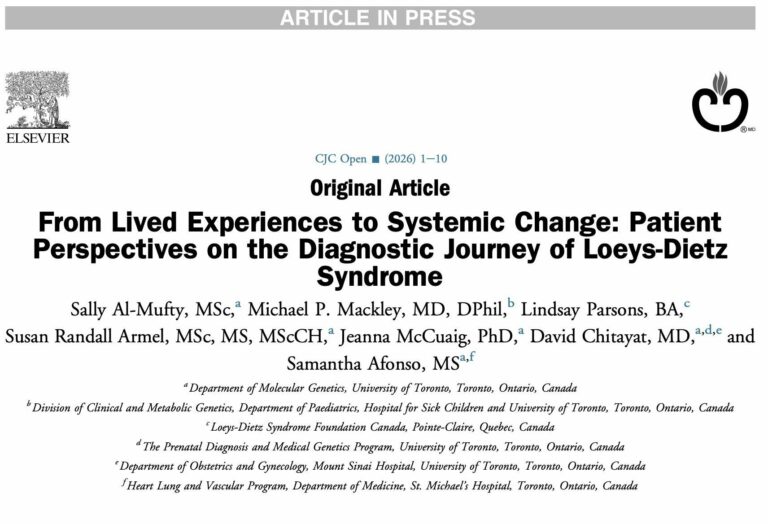
LDSF Canada continues to champion patient-centered research that advances understanding of the lived experiences of individuals and families affected by Loeys-Dietz syndrome (LDS). In 2025, we supported a study exploring patient perspectives on the LDS diagnostic journey, led by Sally Al-Mufty as part of her Master of Science graduate research project and co-authored by LDSFC’s Research and Patient Support Officer.
The study, “From Lived Experiences to Systemic Change: Patient Perspectives on the Diagnostic Journey of Loeys-Dietz Syndrome,” was published in CJC Open, an international, peer-reviewed, open-access journal dedicated to advancing knowledge in cardiology and cardiovascular science. Through interviews and patient experiences, the research sheds light on the challenges individuals face in obtaining an accurate and timely diagnosis, including delays in recognition, barriers to specialist care, and the emotional impact of navigating a rare disease.
The significance of this work was further recognized when it received the Outstanding CAGC Trainee Poster Award at the 2025 Joint Conference of the Canadian Association of Genetic Counsellors (CAGC) and the Canadian College of Medical Geneticists (CCMG).
By amplifying patient voices, this research contributes valuable evidence that can inform clinical practice, improve diagnostic pathways, and guide future national initiatives aimed at enhancing care for individuals living with LDS. It reflects LDSF Canada’s commitment to ensuring that patient experiences remain at the center of research, advocacy, and healthcare system improvement.

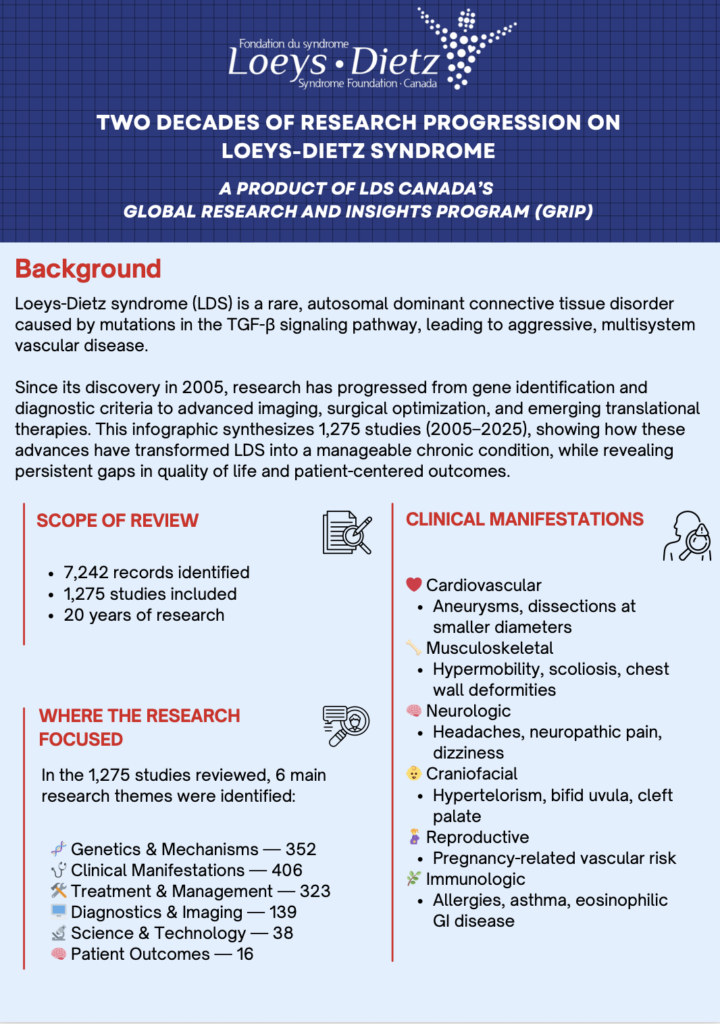
Global Research and Insights Platform (GRIP)
The Global Research and Insights Platform (GRIP) is an innovative, living repository of scientific literature related to Loeys-Dietz syndrome (LDS). Developed and curated by LDSF Canada, GRIP is the only centralized database in the world dedicated exclusively to collecting, organizing, and analyzing LDS research across genetics, clinical manifestations, diagnostics, surgical outcomes, and emerging therapies. The platform serves clinicians, researchers, patients, and advocates by improving access to evidence and supporting knowledge translation across the global LDS community.
As of December 31, 2025, GRIP contained 1,762 publications, making it the most comprehensive and up-to-date collection of LDS research available. Of these, 1,275 articles were directly related to LDS and formed the basis of a systematic review examining the first 20 years of Loeys-Dietz syndrome research. This analysis demonstrated how the field has evolved from genetic discovery and diagnostic clarification (2005–2010), to diagnostic imaging and phenotype expansion (2010–2015), surgical optimization and improved survival (2015–2020), and more recently, genetic screening and translational therapies (2020–2025). While these advances have transformed LDS from a newly described condition into a more manageable chronic disease, important gaps remain in understanding patient-reported outcomes, quality of life, and psychosocial impacts.
By consolidating global research into a single searchable platform, GRIP helps clinicians stay current on evolving best practices, supports researchers in identifying knowledge gaps and developing new studies, strengthens evidence-based advocacy efforts, and improves access to scientific information for patients and families.
In 2026, LDSF Canada will continue expanding GRIP by incorporating newly published research not only on Loeys-Dietz syndrome but also on Marfan syndrome, vascular Ehlers-Danlos syndrome (vEDS), and other heritable thoracic aortic diseases (HTADs). The team also plans to disseminate findings from the 20-year LDS research review through conference presentations and scientific publications, further contributing to the advancement of knowledge in rare connective tissue and aortic disorders.
If you are a researcher or clinician looking for published studies on Loeys-Dietz Syndrome, please contact us at info@loeysdietzcanada.org.
Understanding Life with Hereditary Connective Tissue Disorders: A patient-oriented research program
Living with a hereditary connective tissue disorder (HCTD), such as Loeys-Dietz syndrome, Marfan syndrome, or Ehlers-Danlos syndrome, often means navigating a complex healthcare system while managing a condition that affects many aspects of everyday life. Despite the lifelong and multisystemic nature of these conditions, little is known about how people experience them over time or where important gaps in care remain.
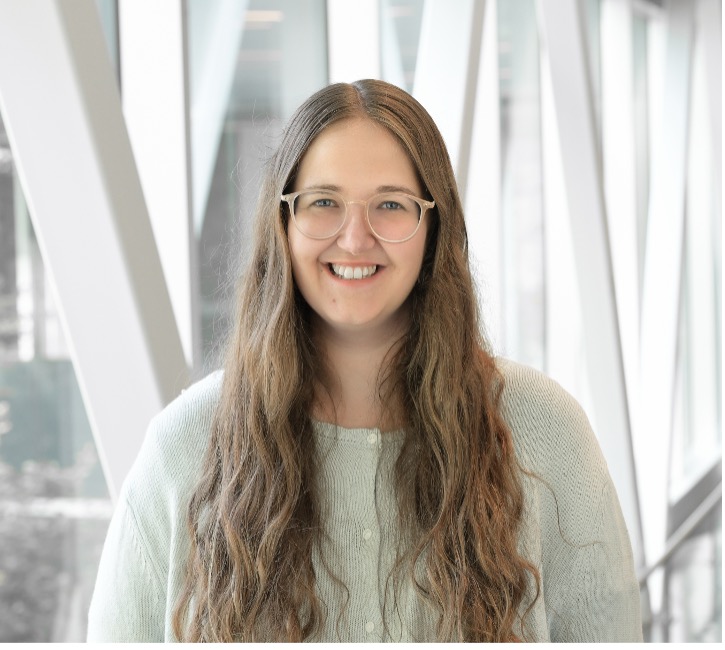
Led by Catherine Côté, M.Sc., Doctoral Candidate in Clinical Psychology at the Université de Montréal and the Centre de recherche du CHUM, under the supervision of Dr. Gabrielle Pagé, Ph.D., this patient-oriented research program aims to better understand the lived experiences of people with HCTDs and generate knowledge that can improve care, support patients and families, and inform healthcare professionals and decision-makers. The project is conducted in partnership with patients, clinicians, researchers, and community organizations, including the Loeys-Dietz Syndrome Foundation Canada.
The research has three main objectives: to review international clinical practice guidelines for hereditary connective tissue disorders, to explore the life journeys of people living with these conditions through interviews and life-course mapping, and to identify opportunities to improve healthcare services and support across different stages of life.
The project will produce practical resources for the HCTD community, including a comprehensive database of clinical recommendations, plain-language research summaries, visual life-course maps, recommendations to improve healthcare services, and a bilingual Patient Learning Pathway to support disease understanding, healthcare navigation, and self-management.
Adults living in Canada with Loeys-Dietz syndrome, Marfan syndrome, or Ehlers-Danlos syndrome are invited to participate and help shape the future of care for people living with hereditary connective tissue disorders.
Contact
For questions about the project or opportunities to participate, please contact:
Catherine Côté : catherine.cote.13@umontreal.ca
Subscribe to our newsletter to receive updates on CONNECT-HCTD: https://mailchi.mp/fea8157d7177/pcp